
Kathmandu is, quietly, one of the best places on earth to study Tibet. Since 1959, when the Dalai Lama led tens of
thousands of Tibetans into exile, Nepal has been home to a substantial Tibetan exile community — and the academic and
publishing infrastructure for Tibetan studies in the English-speaking world has always had deep roots here. We've been
at the centre of that infrastructure since 1984. This is our guide to the essential reading in Tibetan studies.
Tibetan Studies & Tibet Books — A Complete Reading Guide
Table of Contents
Tibetan Studies & Tibet Books — A Complete Reading Guide
Kathmandu is, quietly, one of the best places on earth to study Tibet.
That sounds counterintuitive. Tibet is not Nepal. But since 1959, when the Dalai Lama led tens of thousands of Tibetans into exile after China's annexation, Nepal has been home to a substantial Tibetan exile community. Boudhanath—one of the largest Buddhist stupas in the world—is surrounded by Tibetan monasteries. The Upper Mustang region, which shares a border and a culture with Tibet, is accessible from Nepal. The academic and publishing infrastructure for Tibetan studies in the English-speaking world has always had deep roots in Kathmandu.
We've been at the centre of that infrastructure since 1984. This is our guide to the essential reading in Tibetan studies.
Understanding the Scope
Tibetan studies is not a small field. It covers:
- Tibetan Buddhism—the Vajrayana tradition, its schools, its practices, its texts
- Tibetan history—from the Empire period through the Qing dynasty relationship and into the twentieth century
- Tibet's political situation—the events of 1950-1959, ongoing exile politics, China's governance of the Tibet Autonomous Region
- Tibetan culture, language, art, and medicine
- Travel narratives—accounts by the outsiders, mostly Western, who reached Tibet in the nineteenth and twentieth centuries, often at considerable risk
Different readers come to this field through different interests. This guide is organised by entry point.
Start With History
Seven Years in Tibet—Heinrich Harrer
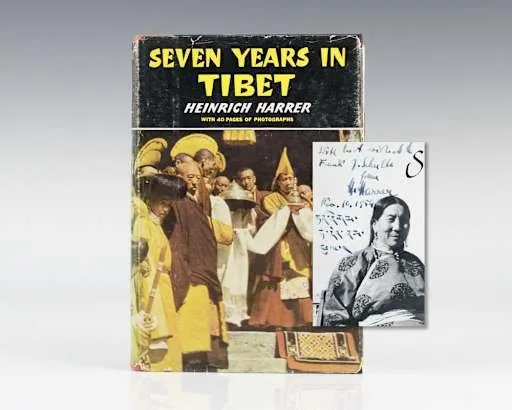
In 1944, Austrian mountaineer Heinrich Harrer escaped from a British internment camp in India and crossed the Himalayas into Tibet on foot. He spent seven years in Lhasa, became a tutor to the young Dalai Lama, and left just before the Chinese military arrived in 1950.
Seven Years in Tibet is an adventure story, a portrait of a vanishing world, and one of the most important firsthand accounts of Tibet before 1950. Harrer writes about Lhasa and its people with the specific detail that only genuine presence produces. You see the city's social hierarchies, its religious calendar, its physical layout. You understand what was lost in 1950 because Harrer had made it so specific and present.
The book was published in 1952. It has not aged. Start here if you're starting anywhere with Tibet.
The Dragon in the Land of Snows—Tsering Shakya
For the history of what happened after Harrer left—after 1950—Tsering Shakya's account is the most comprehensive and rigorously sourced available in English.
Shakya, a Tibetan scholar, spent years accessing Chinese, Tibetan, and Western sources to reconstruct the history of Tibet under Chinese rule from 1950 to the present. This is not an advocacy document—it's a serious work of history. Shakya is honest about what he knows and doesn't know, and he's willing to complicate the standard narratives on both sides.
If you want to understand Tibet's contemporary political situation and how it came to be, this is the essential text. It's dense in places. Read it with patience.
Tibet: A History—Sam Van Schaik
For a longer historical view—going back to the Tibetan Empire of the seventh and eighth centuries, through the period of Mongol patronage, through the Qing dynasty relationship—Sam Van Schaik has written the most accessible single-volume history of Tibet in English.
Van Schaik is a scholar at the British Library and specialises in Tibetan manuscripts. The book is authoritative without being inaccessible. It's a good foundation for understanding how Tibet got to the twentieth century and why the Chinese claim on Tibet looks different depending on which historical period you examine.
Tibetan Buddhism: The Religious Tradition
The Tibetan Book of the Dead — Translated by Chogyam Trungpa and Francesca Fremantle
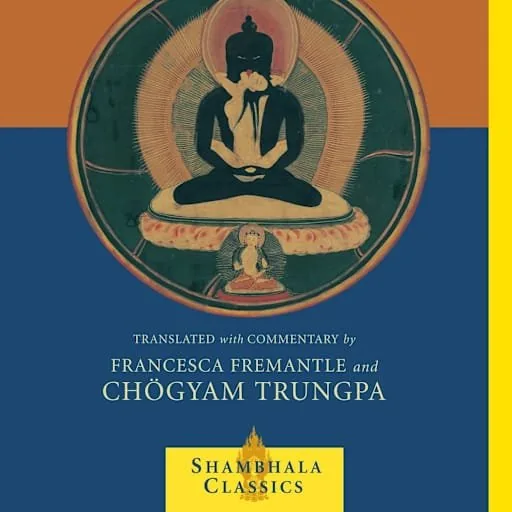
The Bardo Thodol—commonly translated as The Tibetan Book of the Dead—is a text composed in the fourteenth century, attributed to the great master Padmasambhava. It describes the experiences of consciousness in the bardo, the state between death and rebirth.
This is not a comfortable bedside read. It's a text meant to be read aloud to the dying and the recently dead, guiding consciousness through the stages of the bardo toward liberation or a good rebirth. But it's also one of the most extraordinary texts in the world's religious literature—a detailed, philosophically sophisticated account of what the Tibetan tradition believes happens to consciousness when the body dies.
The Trungpa/Fremantle translation is the most readable. Read the introduction carefully—it explains the context and the philosophical framework without which the text itself is opaque.
Introduction to Tibetan Buddhism—John Powers
Covered already in our Buddhist beginners list, but worth naming here as well. For the scholar or serious student of Tibetan Buddhism—the four schools (Nyingma, Kagyu, Sakya, Gelug), their histories and differences, their philosophical positions on dzogchen and mahamudra and the stages of the path—Powers has written the most thorough overview available.
The Crystal and the Way of Light—Chogyal Namkhai Norbu
For the dzogchen tradition specifically—the "Great Perfection," which many regard as the pinnacle of Tibetan Buddhist teaching—Chogyal Namkhai Norbu's account is the most direct introduction by a qualified master. Norbu is a Tibetan teacher who has lived and taught in Europe since the 1960s.
This is a more demanding read than the introductory texts. It assumes some familiarity with Tibetan Buddhist concepts. But for readers who have gotten through the foundations and want to go deeper into the practice tradition, this is the right next step.
Travel Narratives and Personal Accounts
My Journey to Lhasa—Alexandra David-Néel
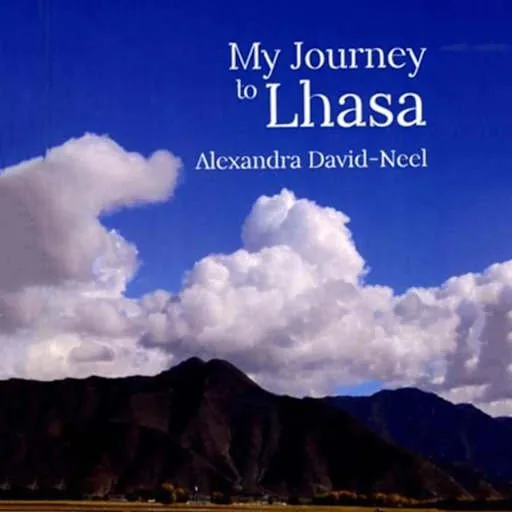
In 1924, Alexandra David-Néel became the first Western woman to enter the forbidden city of Lhasa. She did it disguised as a Tibetan pilgrim, travelling on foot for months through the Himalayan winter.
Her account of the journey is extraordinary. David-Néel was not just an adventurer—she was a serious scholar of Buddhism who had spent years studying in India and spent a decade making her way toward Tibet. The book combines genuine travel writing with genuine religious understanding in a way that is rare.
Read this alongside Seven Years in Tibet for a picture of what Lhasa was before 1950.
In Exile from the Land of Snows—John Avedon
Published in 1984, Avedon's book documents the Tibetan exile experience—the flight of 1959, the establishment of the exile community in Dharamsala and elsewhere, the political situation in the 1970s and 1980s, and the life of the Dalai Lama in exile.
Some of the political material is now dated—the situation has evolved significantly since 1984—but as a portrait of a community in exile, holding onto its culture and identity, it remains valuable. Avedon spent years with the exile community and the access shows.
Rare and Academic Texts
This is where Pilgrims comes into its own.
The academic literature on Tibetan studies is vast. Major university presses — Columbia, Harvard, Wisdom Publications, Snow Lion — have published extensive scholarly series on Tibetan history, religion, art, and language. We stock extensively in all of these categories.
We also carry texts that are difficult to find elsewhere:
- Tibetan-language texts in facsimile or original editions
- Academic journals and monographs from Tibetan studies programmes
- Out-of-print survey texts from the early and mid-twentieth century
- Rare travel accounts by missionaries, explorers, and scholars who reached Tibet in the nineteenth century
If you're a researcher or a specialist who needs specific texts, contact us before visiting. We've been sourcing specialist material for four decades and we have relationships with publishers and distributors that general bookshops don't have access to.
The Vajrayana Tradition: A Brief Map
For readers new to Tibetan Buddhism who find the terminology confusing, a brief orientation:
Vajrayana is the broader term for the tantric Buddhist tradition, of which Tibetan Buddhism is the most widely known expression. The "vajra" is the thunderbolt symbol—representing both the indestructible nature of reality and the diamond-like clarity of awakened mind.
Within Tibetan Buddhism, the four main schools are:
- Nyingma—the oldest school, founded during the first transmission of Buddhism to Tibet in the eighth century. Associated with dzogchen.
- Kagyu—associated with mahamudra practice. The Karmapa is the head of the Karma Kagyu branch.
- Sakya—historically associated with the political administration of Tibet during the Mongol period.
- Gelug—the school of the Dalai Lama, founded in the fourteenth century by Tsongkhapa.
Each school has its own lineage of teachers, its own emphasis in practice and philosophy, and its own extensive literature. The books on this list draw from multiple schools, which is appropriate for an introduction. As you go deeper, you'll need to choose a lineage and go deeper within it.
Why Kathmandu for Tibetan Studies
Boudhanath, fifteen minutes from Thamel by taxi, is the closest thing outside Tibet to a functioning centre of Tibetan Buddhist life. The major monasteries around the stupa represent all four schools. Teaching programmes for Western students have operated here for decades.
Pilgrims has served both the academic and the practitioner communities in Kathmandu since 1984. Our Tibetan studies section reflects that dual audience—rigorous enough for scholars, accessible enough for serious beginners.
If you're here to study, here to practice, or simply here to understand what you're seeing around you, come in. Tell us where you are in your understanding of Tibet. We'll find you the right next book.
We're in Thamel. We've been here a long time. We know this material.
Useful Links from Pilgrims Book House
Explore related collections at Pilgrims
Browse more on our shelves: Tibet, Tibet History, Tibetan Buddhism.


.webp)
