
People come to Buddhism through different doors — meditation, a difficult period in life, or arriving in Kathmandu
surrounded by stupas and realising you've been walking past one of the world's great philosophical traditions without
understanding it. Whatever brought you here, the first question is always the same: what do I read? We've answered
that question thousands of times over four decades in Thamel. This is our honest answer.
Best Buddhist Books for Beginners
Table of Contents
Best Buddhist & Spiritual Books for Beginners
People come to Buddhism through different doors.
Some arrive through meditation—they started a practice and want to understand what the tradition behind it actually says. Some arrive through a difficult period in their lives, when the Western self-help shelf stopped being sufficient. Some arrive in Kathmandu, surrounded by stupas and monasteries and monks, and realise they've been walking past one of the world's great philosophical traditions without understanding a word of it.
Whatever door you came through, this is the same first question: what do I read?
We've answered that question thousands of times over four decades in Thamel. Here's the honest answer.
Start with the Source
What the Buddha Taught—Walpola Rahula
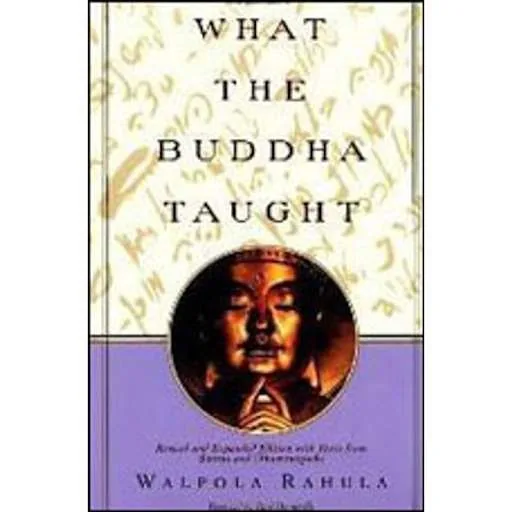
If you read only one book about Buddhism, this is the one.
Walpola Rahula was a Sri Lankan Buddhist monk and scholar who wrote What the Buddha Taught in 1959 for Western readers who wanted to understand the actual teachings—not a westernised version, not a spiritual self-help adaptation, but what the Buddha said and what it means.
The book covers the Four Noble Truths and the Eightfold Path with rare clarity. Rahula doesn't try to make Buddhism palatable by softening the hard parts. The teaching that the self doesn't exist in the way we think it does — one of the most philosophically demanding aspects of Buddhist thought — is explained carefully and directly.
This is a short book. About 150 pages. Read it slowly. It rewards re-reading.
We've stocked What the Buddha Taught since we opened. It's the book we give to customers who say they know nothing about Buddhism and want to start from the beginning. There's no better starting point.
In the Buddha's Words—Bhikkhu Bodhi
Once you've read Rahula, you may want to go directly to the source texts. In the Buddha's Words is the best anthology of the Pali Canon available in English — the actual discourses of the Buddha as preserved in the Theravada tradition, translated by one of the most respected scholars in Western Buddhism.
This is not a light read. It's a substantial book and the source texts require a different kind of attention than contemporary explanatory writing. But if you're serious about Buddhism rather than just curious, this is where the teaching actually lives.
Read Rahula first. Then, when you're ready, come back to Bhikkhu Bodhi.
For the Practical Beginner
The Art of Happiness—The Dalai Lama and Howard Cutler
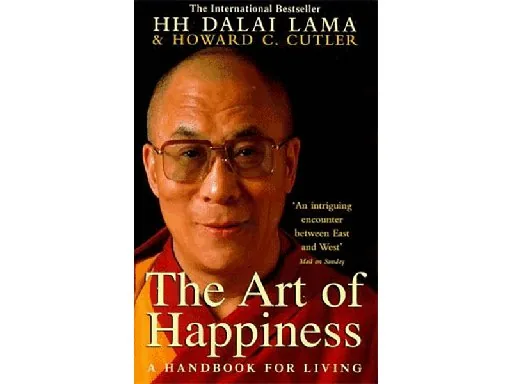
Cutler, a psychiatrist, spent a series of conversations with His Holiness the Dalai Lama asking questions that Western readers would ask: What is happiness? How do we find it? What does Buddhist thought offer that Western psychology doesn't?
The resulting book is conversational, accessible, and genuinely useful. It's not a scholarly text—Cutler's framing ensures it isn't—but for readers who want to understand how Buddhist thinking applies to the texture of everyday life, this is an excellent bridge.
The Dalai Lama's voice comes through clearly even through the interview format. He's both funnier and more practically grounded than his public image sometimes suggests.
This is the book we recommend for people who aren't sure they want to commit to a serious study of Buddhism but are curious whether it has something to offer their lives. Most of them come back for more.
When Things Fall Apart—Pema Chodron
Pema Chodron is an American Buddhist nun in the Tibetan tradition, a student of Chögyam Trungpa Rinpoche, and one of the most read Buddhist writers in English. When Things Fall Apart was published in 1997 and has never been out of print.
The book deals with how to be with difficulty—grief, fear, disappointment, the moments when life doesn't hold together the way you expected. Chodron's approach is Buddhist but not jargon-heavy. She writes with honesty about her own experience and the teaching comes through honesty.
This is not a cheerful book. It doesn't promise that Buddhism will fix your problems. It offers something harder and more valuable: a way of being with difficulty without running away from it.
We recommend it particularly to readers going through a hard time who want something with genuine weight—not inspiration-poster wisdom but actual practice.
The Miracle of Mindfulness—Thich Nhat Hanh
Thich Nhat Hanh, the Vietnamese Zen master who died in 2022, made mindfulness accessible to Western readers before mindfulness became a wellness industry keyword. The Miracle of Mindfulness was written as a letter to a fellow monk and published in English in 1975.
It's a short book about presence—about doing the dishes, washing the baby, drinking tea, walking—as practices of attention. The Zen tradition sees no separation between formal meditation and everyday life, and this book makes that understanding practical and immediate.
If you're new to meditation and want something that isn't too abstract, start here.
For Tibetan Buddhism Specifically
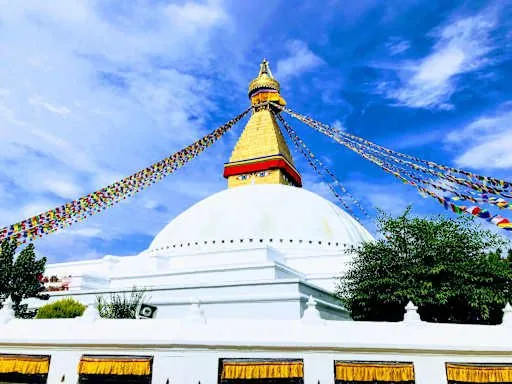
Kathmandu sits at the intersection of multiple Buddhist traditions. The Tibetan tradition is particularly visible here—the major stupas of Boudhanath and Swayambhunath are Tibetan Buddhist sites, and the Tibetan exile community has maintained monasteries throughout the Kathmandu Valley since the 1960s.
If you want to understand what you're seeing in and around Kathmandu, a basic introduction to Tibetan Buddhism specifically is worth the time.
The Tibetan Book of Living and Dying—Sogyal Rinpoche
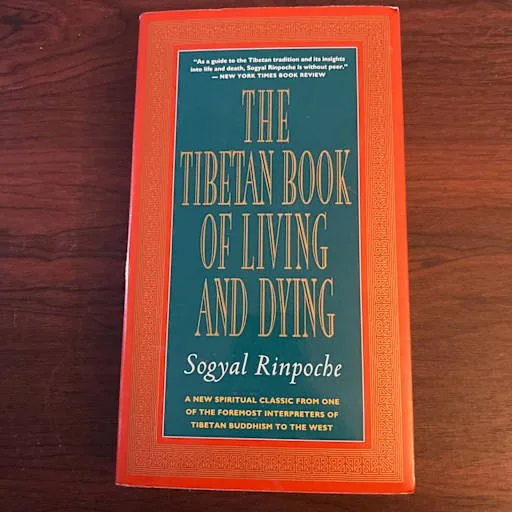
Sogyal Rinpoche's The Tibetan Book of Living and Dying (1992) remains the standard introduction to Tibetan Buddhist teaching on death, impermanence, and what the tradition understands about consciousness after death.
The Tibetan Buddhist tradition has an unusually detailed and philosophically sophisticated account of dying and what comes after—the Bardo Thodol, commonly known in English as The Tibetan Book of the Dead, is the famous source text. Sogyal Rinpoche's book makes this accessible without reducing it to a Western self-help framework.
For anyone visiting the major stupas in Kathmandu and wanting to understand the tradition behind them, this is useful background reading.
Introduction to Tibetan Buddhism—John Powers
If you want a more scholarly introduction, John Powers has written the most thorough and readable academic overview of Tibetan Buddhism available in English. It covers history, philosophy, practice, and the different schools within the Tibetan tradition.
This is a textbook, essentially, but a very readable one. We recommend it to travelers and expats who want to understand what they're seeing in Tibetan Buddhist contexts rather than just being moved by it without comprehension.
Three More Books Worth Having
These didn't make the main list but they come up often enough in our conversations with customers that they're worth naming.
Zen Mind, Beginner's Mind—Shunryu Suzuki. This is a Zen book, not a Tibetan Buddhist book, and the distinction matters—the traditions are different. But Suzuki's talks to his students at the San Francisco Zen Center in the 1960s produced one of the clearest articulations of what it means to practice with a beginner's mind. "In the beginner's mind there are many possibilities, but in the expert's mind there are few." That sentence has sent more people back to their meditation cushion than any formal teaching we know of. Worth having regardless of which tradition you end up in.
Buddhism Without Beliefs—Stephen Batchelor. Batchelor is a former monk in both the Tibetan and Korean Zen traditions who became the most articulate voice for a secular approach to Buddhism—Buddhism as a practice and a philosophy rather than a religion requiring supernatural belief. His position is controversial among traditional Buddhists. It's also useful for readers who are drawn to Buddhist ideas but uncomfortable with the metaphysical claims. Read it alongside something more traditional to get a sense of the debate.
The Heart of the Buddha's Teaching — Thich Nhat Hanh. If you find The Miracle of Mindfulness resonates and want to go deeper with Thich Nhat Hanh, this is the next book. It's more systematic—covering the Four Noble Truths, the Eightfold Path, and a range of other core teachings—but written with the same quality of presence that makes all his work readable. It's longer than Mindfulness and covers more ground. Think of it as the follow-up volume.
A Note on Reading Buddhism in Nepal
There's something specific about reading about Buddhism while you're in a country where it's still a living tradition.
The stupas in Boudhanath aren't tourist sites with Buddhist content—they're active religious sites where monks and laypeople pray and circumambulate every day. Reading about Buddhist practice and then watching the morning circumambulation at Boudha is a different experience from just watching it without context, or just reading about it without the physical reality.
We're located in Thamel, walking distance from Swayambhunath. Boudhanath is accessible by taxi in twenty minutes. If you're reading any of the books on this list, we'd encourage you to read in one of those places and let the context and the text work together.
What We Keep in Stock
Buddhism is the category of Pilgrims where we go deepest. We carry:
- Contemporary practical books (Pema Chodron, Thich Nhat Hanh, the Dalai Lama's extensive bibliography)
- Scholarly introductions to Theravada, Mahayana, and Vajrayana traditions
- Translated source texts—sutras, Tibetan commentaries, Pali Canon
- Books on specific practices: meditation, dzogchen, vipassana
- Rare and out-of-print texts on Tibetan Buddhism, often difficult to find outside specialist suppliers
If you're looking for something specific, come in and ask. We know our Buddhism section well and we'll find what you're looking for or tell you honestly if we don't have it.
Where to Start If You're Still Not Sure
One book. Start with one.
If you want the teachings themselves: What the Buddha Taught by Walpola Rahula.
If you want something practical for your current life: When Things Fall Apart by Pema Chodron.
If you want to understand what you're seeing in Kathmandu's Buddhist sites: The Tibetan Book of Living and Dying by Sogyal Rinpoche.
Read one. If it opens something, come back. We'll know where to send you next. We're in Thamel. Come find us.
Useful Links from Pilgrims Book House
Explore related collections at Pilgrims
Browse more on our shelves: Buddhism, Zen Buddhism, Tibetan Buddhism.

.webp)
