
Nepal surprises every traveler who arrives underprepared. The chaos of Kathmandu, the temple festivals, the political
history — none of it lands the way it should without context. We've been watching visitors arrive in Thamel since
1984. The ones who read first always get more out of it. This is the list we give them.
Best Books About Nepal for Travelers & Expats
Table of Contents
Best Books About Nepal for Travelers & Expats
Nepal surprises people. Usually not in the ways they expected.
They expect the mountains. They get the mountains. They also get traffic in Kathmandu that doesn't follow any visible logic, temple festivals that seem to appear from nowhere, a political history that would take a semester to properly explain, and a culture that's been written about extensively—but rarely quite right.
The best thing you can do before you arrive is read. Not a guidebook. Not a listicle. Books written by people who were here long enough to understand what they were seeing.
This is our list. We've been in Thamel since 1984, which means we've watched several generations of travelers arrive with varying degrees of preparation. The ones who read do better. Not just logistically—they see more. They understand more. Their trip means more.
Start Here: The Foundations
Forget Kathmandu—Manjushree Thapa
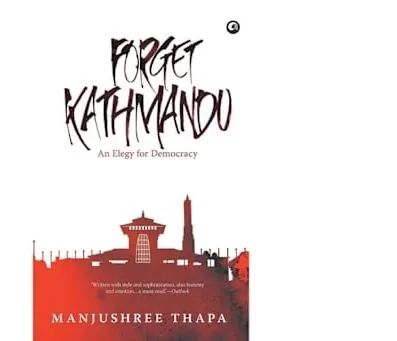
This is the book we give people who ask us one question: "What happened to Nepal?"
Manjushree Thapa is one of Nepal's most important English-language writers, and Forget Kathmandu (2005) is her attempt to reckon honestly with her country's recent history—the royal massacre of 2001, the Maoist insurgency, the political chaos of the nineties and early two-thousands. It's part memoir, part political history, part cultural analysis.
It's also one of the more honest accounts of Nepal you'll find, which sometimes means it's uncomfortable. Thapa doesn't write the Nepal that tourists expect. She writes the one that exists.
Read this before you arrive. It won't make Kathmandu less chaotic, but it will make the chaos more legible.
The Bullet and the Ballot Box—Aditya Adhikari
If you want political history without memoir framing, The Bullet and the Ballot Box is the book. Aditya Adhikari spent years reporting on Nepal's Maoist insurgency and the political transformation that followed. This is the most rigorous account in English of how Nepal went from an absolute monarchy to a federal democratic republic in roughly two decades—a process that involved a ten-year civil war, a royal massacre, mass protests, and multiple constitutional crises.
You don't need to read this cover before a two-week holiday. But if you're staying longer, or if you genuinely want to understand the country you're in rather than just the surface of it, this is where to go.
Arresting God in Kathmandu—Samrat Upadhyay
Short stories. Fiction. But don't skip this one on that account.
Samrat Upadhyay grew up in Nepal and writes in English about Nepali urban life—Kathmandu families, marriages under pressure, desire and disappointment in a city that's rapidly changing. His fiction captures something that non-fiction often misses: what daily life actually feels like for the people who live here.
The title story alone is worth the price of the collection. But read it straight through. Each story adds something.
For Travelers Heading Outside Kathmandu
Palpasa Cafe—Narayan Wagle
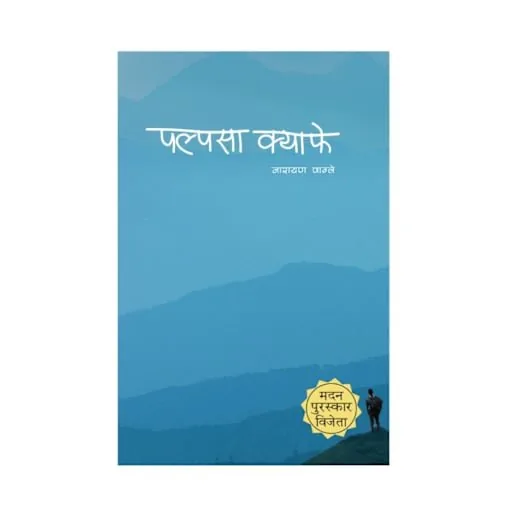
We mentioned this in our Nepali literature list and we're mentioning it again here, because it belongs on every list.
The novel is set partly in Kathmandu and partly in rural Nepal during the Maoist conflict. Wagle was a journalist during the war, and the rural sections of this book—the checkpoints, the village dynamics, the way conflict reshaped ordinary communities—are the most accurate fiction account of that period that we know of.
If you're traveling outside the Kathmandu Valley, this will prepare you for what the countryside feels like and what it carries.
The Snow Leopard—Peter Matthiessen
Already mentioned in our trekking list, but it earns a second mention here.
For anyone going into remote Nepal—Dolpo, Mustang, the Khumbu beyond the standard tourist trail—Matthiessen's account of travelling through the Himalayas' interior captures an atmosphere that no guidebook touches. The silence, the altitude, the way the landscape forces a different pace of thought.
Pack it. Read it on the trek.
History and Culture
Kathmandu: Inside the World's Only Hindu Kingdom—Thomas Bell
Thomas Bell was a journalist based in Kathmandu for years. Kathmandu is his attempt to write honestly about the city he watched change—the end of the Hindu kingdom, the political upheaval, the way Kathmandu's ancient culture and its rapidly modernizing present coexist without quite reconciling.
This is one of the best books written in English about the city. Bell writes with obvious affection but without romanticism, which is the right balance. It was published in 2014, so some of the most recent political developments aren't covered, but as a portrait of a city in transformation it's still the standard.
Kingdoms Beyond the Clouds—Jonathan Gregson
For travelers interested in Nepal's mountain kingdoms—Mustang, the former Sherpa territories, the historical relationships between Nepal and Tibet—Gregson's book covers ground that few others have written about as readably.
The research is serious and the writing is accessible. If you're heading to Mustang or are interested in what Nepal looks like from its highest, most remote areas, this is a useful companion.
Nepal: The Kingdom in the Himalayas—Toni Hagen
This is the older entry on the list. Hagen was a Swiss geologist who was one of the first Westerners to travel extensively through Nepal in the 1950s, when the country was just opening to outsiders.
The photographs alone make it worth having. But the written account is also valuable—it documents a Nepal that is genuinely gone, before roads reached most of the country, before mass trekking, before the transformations of the past half century. Reading it alongside a contemporary account gives you a sense of how fast Nepal has changed and what has remained.
We often have copies at Pilgrims. Ask if you don't see it on the shelves.
Nepal Through a Foreign Lens: What to Read with Caution
Not all books about Nepal are equal—and some of the most widely read ones should come with a warning label.
A lot of travel writing about Nepal was produced during the 1960s and 70s, when the country was newly open to outsiders and Western writers arrived with a set of assumptions about "the mystical East" that didn't age well. You'll find books that describe Nepal as timeless, unchanging, spiritual in a way that flattens real people into backdrop. These books tell you more about the writer's imagination than about Nepal.
Read them if you want—some are well-written—but read them knowing what they are.
The books that hold up are the ones where the writer stayed long enough to be surprised. Long enough for their initial assumptions to break down. That's the test. Forget Kathmandu passes it. Kathmandu by Thomas Bell passes it. Most books written after a three-week visit don't.
Dervla Murphy's The Waiting Land is one of the older travel accounts that still holds up. Murphy spent time in a Tibetan refugee camp in Nepal in the late 1960s and wrote about it with the same unsentimental directness that characterises all her best work. It's not comfortable reading. It's not meant to be.
Isabella Tree's The Living Goddess deals with the Kumari tradition—the living goddess of Kathmandu—and is one of the more carefully researched accounts of a religious practice that is frequently misrepresented. Tree spent years on it and the care shows.
For Expats: The Longer Stay
The Politics of Nepal (Various Academic Texts)
We won't pretend there's a single perfect book for understanding Nepal's contemporary politics from an expat perspective. The situation moves too fast and the academic literature has a lag. What we recommend instead: read Adhikari's The Bullet and the Ballot Box for the historical foundation, then supplement with current journalism. The Kathmandu Post and The Record Nepal both do serious reporting.
For the longer context, we stock a range of academic texts on Nepali political history, caste dynamics, and development economics. Come in and tell us what angle you're coming from—we'll point you to what's most relevant.
Being a Foreigner in Nepal
There are several memoirs and personal accounts written by long-term expats and aid workers who spent years in Nepal. The quality varies wildly. The ones we recommend tend to be honest about what it's like to be an outsider in a country with a very particular relationship to outsiders—respectful of tourists, occasionally wary of long-term foreign residents, navigating its own complex feelings about development and aid.
Ask us in-store for our current recommendations in this category. Stock changes, and we'd rather tell you what we actually have than list titles you'll struggle to find.
What We've Noticed Over 40 Years
The travelers who get the most out of Nepal are not the ones who planned the most meticulously. They're the ones who arrived curious and stayed curious. Books help with that. They give you questions to bring with you rather than answers you think you already have.
Nepal will answer the questions you don't bring. That's what all of the writers on this list found out—you think you're coming to see the mountains and you end up seeing something else entirely.
Read before you come. Read while you're here. Buy something to take home that will make you think about this country for years after you leave.
Find These Books at Pilgrims Book House, Thamel
We stock all of the titles mentioned here, plus a broader selection of Nepal history, culture, travel memoir, and Nepali fiction in both Nepali and English.
We're in Thamel, Kathmandu—most visitors walk past our door at least once. Stop in. Tell us where you're going and how long you're staying, and we'll build you a reading list on the spot.
That's what we've been doing since 1984.
Useful Links from Pilgrims Book House
Explore related collections at Pilgrims
Browse more on our shelves: Nepal History, Nepal Non-Fiction, Nepal Anthropology.


.webp)
