
Nepal ASEAN Tourism Year 2026: The Ultimate Guide for Southeast Asian Travelers
Nepal has officially declared 2026 its ASEAN Tourism Year, and the timing could not be better. With over 92,000 ASEAN arrivals recorded in January 2026 alone — a figure that reflects a rapidly growing appetite among Thai, Indonesian, Malaysian, Singaporean, and Filipino travelers for Himalayan adventure — Nepal's Nepal Tourism Board (NTB) has launched targeted campaigns, special travel packages, and improved flight connectivity specifically designed to welcome Southeast Asian visitors.
For ASEAN travelers, Nepal offers a uniquely compelling combination: Buddhist heritage sites of global significance, short and accessible Himalayan treks that fit a one- or two-week holiday window, rich wildlife experiences, and a spiritual depth that resonates deeply with the Buddhist and Hindu traditions of Southeast Asia. Whether you are a Thai pilgrim seeking the birthplace of the Buddha, a Singaporean weekend trekker eyeing Annapurna views from Pokhara, or an Indonesian family looking for a wildlife safari in Chitwan, 2026 is the year to make Nepal happen.
Before you go, prepare with the best guides and Himalayan literature available at Pilgrims Book House | Buy Books Online Nepal - Rare Himalayan Titles — Nepal's most trusted bookstore since 1984, shipping worldwide.
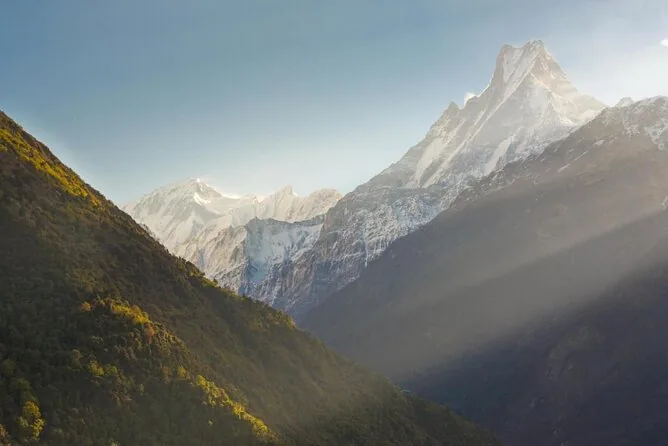
Why ASEAN Travelers Are Choosing Nepal in 2026
The connection between Southeast Asia and Nepal runs deeper than geography. Buddhism — the shared spiritual thread woven through Thai, Burmese, Sri Lankan, and much of Indonesian and Malaysian culture — was born in Nepal. The Mahabharata and Hindu traditions that permeate Balinese and Javanese culture have deep roots in the same Himalayan civilization that shaped Nepal. For ASEAN travelers, a trip to Nepal is not simply a holiday — it is a homecoming of sorts, a return to the source of traditions that have shaped their cultures for millennia.
Practically speaking, 2026 brings several new advantages for ASEAN visitors. Direct flights from Bangkok (Thai Airways), Kuala Lumpur (AirAsia and Malaysia Airlines), Singapore (SilkAir connections), and Jakarta have expanded, making Nepal more accessible than ever from the region. Visa-on-arrival is available for all ASEAN passport holders for stays of 15, 30, or 90 days, with straightforward processing at Tribhuvan International Airport in Kathmandu. And with a daily budget of just USD $50–80 covering teahouse accommodation, meals, and local transport, Nepal remains one of the most affordable destination countries in Asia for the quality of experience it delivers.
Top 7 Must-Visit Destinations for ASEAN Travelers in Nepal
1. Lumbini — The Birthplace of the Buddha
For Buddhist travelers from Thailand, Myanmar, Cambodia, Sri Lanka, and Indonesia, Lumbini is one of the most sacred pilgrimage destinations on earth. Located in the Terai lowlands of southern Nepal, Lumbini is the birthplace of Siddhartha Gautama — the historical Buddha — and has been a UNESCO World Heritage Site since 1997. The sacred garden at the heart of Lumbini contains the Maya Devi Temple, built around the exact spot where the Buddha is said to have been born in 623 BCE, and the Ashoka Pillar erected by the Indian emperor Ashoka in 249 BCE to mark his own pilgrimage to the site.
Surrounding the sacred garden is the Lumbini Development Zone, a remarkable international Buddhist complex containing monasteries and temples built by Buddhist nations from across the world — including the magnificent Thai, Chinese, Japanese, Korean, Vietnamese, Sri Lankan, and Myanmar temples, each reflecting their own national architectural tradition. Walking through this international Buddhist village in a single afternoon is an extraordinary experience, offering a panoramic view of Buddhism's spread across Asia over 2,500 years.
A recommended 2–3 day Lumbini itinerary for ASEAN pilgrims: Day 1 — arrive from Bhairahawa airport (45 minutes from Kathmandu by flight), visit the Maya Devi Temple and sacred garden, attend the evening meditation at the World Peace Pagoda. Day 2 — explore the international monastic zone, with particular time at the Thai, Indonesian, and Myanmar monasteries. Day 3 — visit the nearby Kapilvastu archaeological site, the ancient kingdom where the young Siddhartha grew up, before departing.
2. Kathmandu Valley — Boudhanath & Swayambhunath Stupas
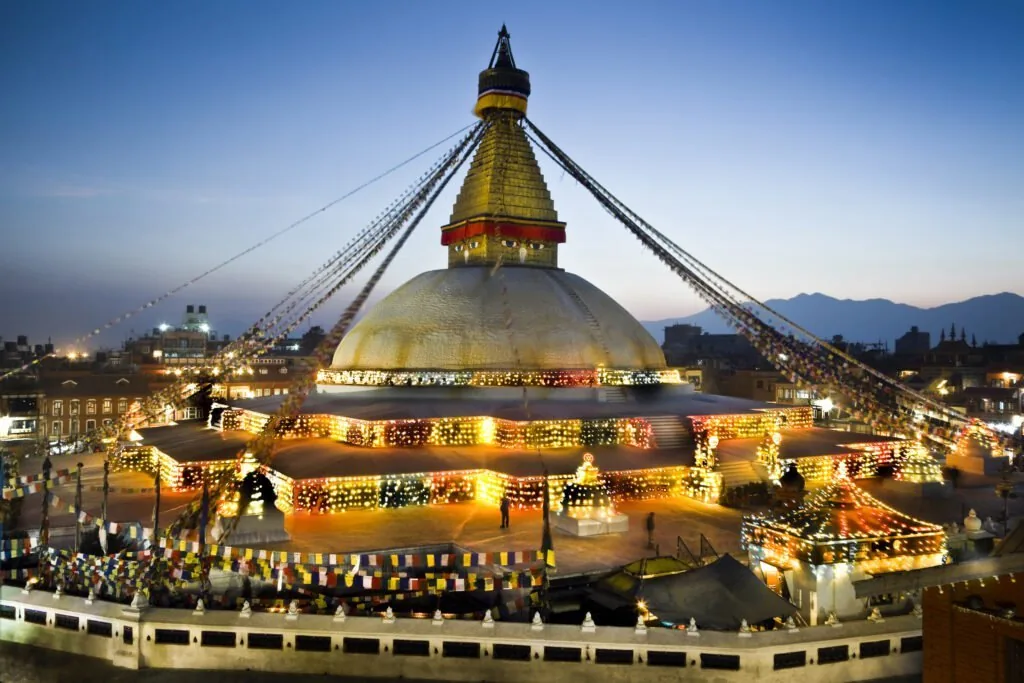
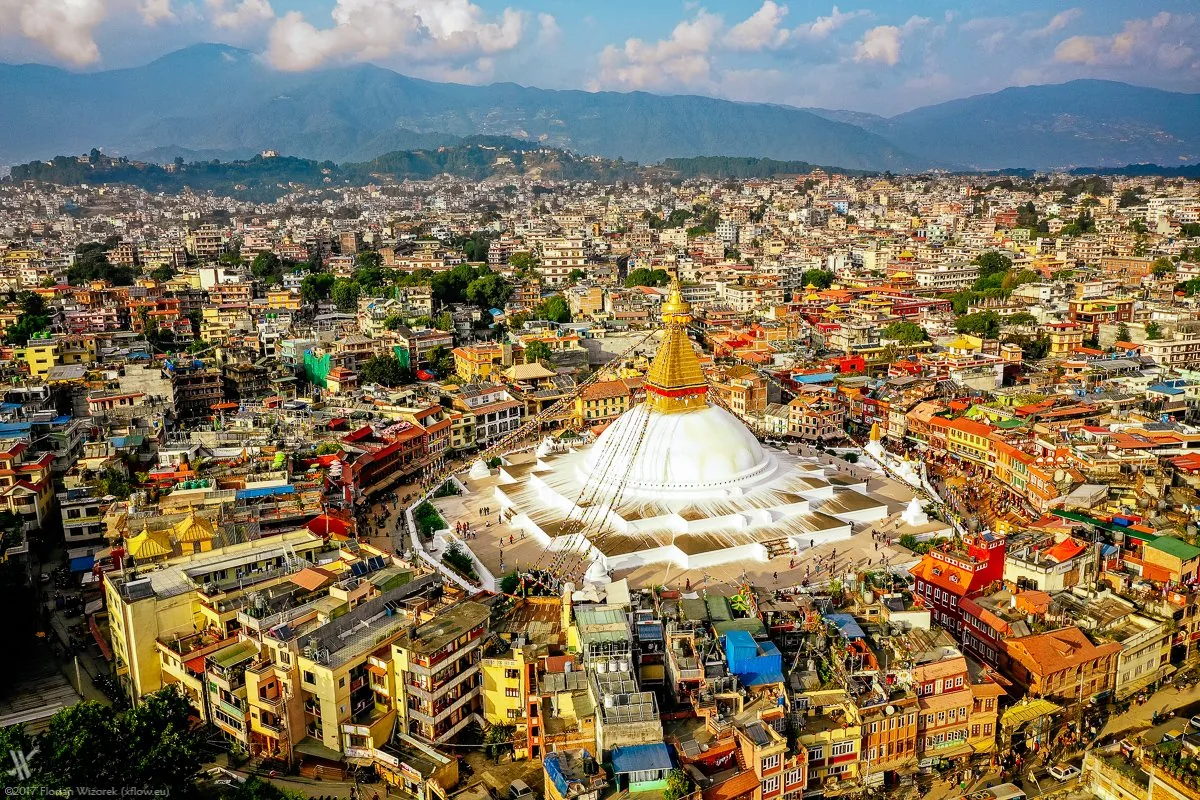
Kathmandu's two great Buddhist stupas — Boudhanath and Swayambhunath — are among the most spiritually powerful sites in the Himalayan world, and both resonate profoundly with ASEAN Buddhist travelers. Boudhanath Stupa, one of the largest stupas in the world, is the heart of Nepal's Tibetan Buddhist community. Its vast whitewashed dome, ringed by prayer wheels and surrounded by monasteries, thangka shops, and Tibetan restaurants, creates an atmosphere of deep spiritual calm in the middle of a bustling city. The stupa is most magical at dawn and dusk, when monks in saffron and maroon robes circumambulate the dome, spinning prayer wheels and murmuring mantras.
Swayambhunath — known affectionately as the Monkey Temple — sits atop a hill overlooking the Kathmandu Valley and is one of Nepal's oldest and most sacred sites, predating the arrival of Buddhism by several centuries. The climb up its 365 steps is rewarded with panoramic valley views and the striking sight of the golden spire and the Buddha's all-seeing eyes painted on every face of the tower. Both stupas can be visited in a single day from Thamel, making them ideal for ASEAN travelers with limited time in Kathmandu.
3. Pokhara & Short Annapurna Treks (3–5 Days)
Pokhara is Nepal's most relaxed and beautiful city — a lakeside resort town with direct views of the Annapurna and Dhaulagiri ranges reflected in the calm waters of Phewa Lake. For ASEAN travelers who want a genuine Himalayan trekking experience without the length or altitude demands of Everest Base Camp, the short treks around Pokhara are ideal. Australian Camp (2–3 days) and the Ghorepani Poon Hill circuit (3–4 days) both offer stunning Annapurna range views, comfortable teahouse accommodation, and maximum altitudes of around 3,200 metres — well within comfortable range for first-time high-altitude trekkers from the tropics.
The Poon Hill sunrise — watching Dhaulagiri (8,167m), Annapurna South, and the iconic Machapuchare (Fishtail Mountain) emerge from darkness in a blaze of gold and pink — is one of the most celebrated natural spectacles in all of Asia, and entirely achievable for a fit ASEAN traveler on a one-week Nepal trip. Pokhara itself offers excellent lakeside restaurants, adventure sports (paragliding, kayaking, zip-lining), and a relaxed cafe culture that makes it a perfect base for 2–3 days of rest and acclimatization around the trekking days.
4. Chitwan National Park — Jungle Safari
For Malaysian and Indonesian travelers more drawn to wildlife than mountains, Chitwan National Park in Nepal's subtropical Terai lowlands offers one of Asia's finest safari experiences. Home to the one-horned rhinoceros, Bengal tiger, gharial crocodile, Gangetic river dolphin, wild elephant, and over 500 bird species, Chitwan is a UNESCO World Heritage Site and one of the most biodiverse protected areas in Asia. A 2-day Chitwan package typically includes jeep safaris, elephant-back rides (now available in ethical non-riding formats), canoe trips on the Rapti River, and a cultural evening with the indigenous Tharu community — whose stick dance performance is one of Nepal's most distinctive cultural experiences.
5. Kathmandu's Living Heritage — Durbar Squares & Newari Culture
Kathmandu's three Durbar Squares — in Kathmandu, Patan, and Bhaktapur — are UNESCO-listed living heritage sites that offer an unparalleled window into Nepal's ancient Newari civilization. The intricately carved wooden temples, courtyards, and palaces of Bhaktapur in particular are extraordinarily well-preserved, offering a sense of stepping back 500 years. For ASEAN travelers familiar with the temple complexes of Ayutthaya, Angkor, or Borobudur, Kathmandu's heritage sites will feel both familiar and fascinatingly distinct — a Himalayan branch of the same great civilizational tree.
6. Nagarkot — Himalayan Sunrise Viewpoint
Just 32 kilometres from Kathmandu, Nagarkot sits at 2,195 metres on the rim of the Kathmandu Valley and offers one of the most accessible panoramic Himalayan views in Nepal — including a clear-day sightline to Everest. A night at one of Nagarkot's hillside resorts, waking to watch the sunrise paint the Himalayan horizon, is a simple, deeply memorable experience that requires no trekking fitness and fits easily into any Kathmandu itinerary. It is particularly popular with ASEAN families and older travelers seeking mountain scenery without strenuous effort.
7. Bandipur — Nepal's Hidden Hill Town
One of Nepal's best-kept secrets, Bandipur is a beautifully preserved Newari hilltop town midway between Kathmandu and Pokhara, largely untouched by the mass tourism that has transformed Thamel and Lakeside. The car-free main street, lined with traditional merchant houses, offers views across the Marsyangdi valley to the Annapurna and Himalchuli ranges. Bandipur is ideal for ASEAN travelers seeking an authentic, unhurried Nepal experience away from the main tourist trail — and makes a natural overnight stop on the Kathmandu-to-Pokhara journey.
ASEAN-Friendly Itinerary Comparison
| Destination | Duration | Best For | Why ASEAN Travelers Love It |
|---|---|---|---|
| Lumbini | 2–3 days | Pilgrimage, spirituality | Birthplace of Buddha — deeply sacred for Thai, Myanmar, Indonesian Buddhists |
| Boudhanath & Swayambhunath | 1 day | Culture, Buddhism | World's largest stupas; resonates with Buddhist traditions across SEA |
| Pokhara Short Treks | 3–5 days | Adventure, nature | Annapurna views without extreme altitude — perfect for Singapore/KL weekend trekkers |
| Chitwan National Park | 2 days | Wildlife safari | One-horned rhinos, tigers, river dolphins — beloved by Malaysian & Indonesian nature lovers |
| Kathmandu Durbar Squares | 1–2 days | Heritage, history | UNESCO temple complexes comparable to Angkor and Borobudur in cultural depth |
| Nagarkot | 1 night | Scenery, relaxation | Himalayan sunrise including Everest — no trekking required, great for families |
| Bandipur | 1 night | Culture, slow travel | Authentic Newari hill town, car-free, Annapurna views — off the beaten track |
Practical Tips for ASEAN Travelers to Nepal 2026
Visas
All ASEAN passport holders can obtain a visa-on-arrival at Tribhuvan International Airport in Kathmandu. Fees are USD $30 for 15 days, USD $50 for 30 days, and USD $125 for 90 days. You will need a passport-sized photo, the visa fee in US dollars or equivalent, and a completed arrival card. Processing is straightforward and typically takes 20–40 minutes on arrival. Online visa pre-approval is also available through the Nepal government's online visa portal, which can speed up the airport process significantly during peak season.
Best Time to Visit
October to December is ideal for ASEAN travelers — post-monsoon skies are crystal clear, mountain views are at their most dramatic, and Nepal's festival calendar is at its richest, with Dashain (Nepal's biggest festival, similar in scale to Eid or Songkran) and Tihar (the festival of lights, comparable to Diwali) both falling in this period. March to May is the second peak season, excellent for trekking and spectacularly beautiful as rhododendrons bloom across the Himalayan foothills. Avoid June through September for mountain trekking — the monsoon brings heavy rain, leeches on lower trails, and persistent cloud cover obscuring the peaks.
Flights from ASEAN Cities
- Bangkok (BKK/DMK): Thai Airways operates direct flights to Kathmandu (TIA); budget options via AirAsia with one stop.
- Kuala Lumpur (KUL): AirAsia and Malaysia Airlines offer regular service to Kathmandu, often the best-value fares in the region.
- Singapore (SIN): Connections via Bangkok, Delhi, or Doha; typical travel time 6–8 hours with one stop.
- Jakarta (CGK): Connections via Kuala Lumpur or Bangkok; typically 8–10 hours total travel time.
- Manila (MNL): Connections via Bangkok, Hong Kong, or Singapore.
Budget Guide
Nepal remains one of Asia's most affordable destinations. Budget travelers staying in teahouses and guesthouses can manage comfortably on USD $40–55 per day including accommodation, three meals, and local transport. Mid-range travelers — comfortable hotels, occasional restaurant meals, private transport — should budget USD $80–150 per day. A guided 10-day Nepal itinerary covering Kathmandu, Pokhara, and Lumbini (including a short Annapurna trek) can be completed for USD $800–1,200 all-in for a budget-conscious ASEAN traveler booking locally.
Connectivity & Getting Around
Nepal has reliable 4G coverage in Kathmandu, Pokhara, and along major trekking routes. Purchase an Ncell or Nepal Telecom SIM card at the airport on arrival — data packages are inexpensive and provide good connectivity for navigation and communication. Kathmandu does not have Grab or Gojek equivalents, but metered taxis and app-based services like Pathao and inDrive are widely available. For intercity travel, tourist buses between Kathmandu and Pokhara (6–7 hours, USD $10–15) are comfortable and popular; domestic flights (30 minutes, USD $90–110) are faster and worth it given the scenic Himalayan approach into Pokhara.
Deepen your travel experience with Buddhist philosophy, Nepal history, and trekking literature from Pilgrims Book House | Buy Books Online Nepal - Rare Himalayan Titles. We stock rare Himalayan titles not available anywhere else online.
Cultural Do's & Don'ts for ASEAN Visitors
Nepal's culture is warm and welcoming to visitors, but a few customs are worth knowing before you arrive. The Namaste greeting — hands pressed together at the chest, a slight bow — is universally understood and deeply appreciated; ASEAN visitors from Buddhist traditions will find it immediately familiar. Remove your shoes before entering temples, monasteries, and many traditional homes. Dress modestly at religious sites — shoulders and knees covered is the standard expectation, particularly at Hindu temples like Pashupatinath where non-Hindus are restricted from entering the inner sanctum.
Beef is not consumed in Nepal — the cow is a sacred animal in Hinduism and Nepal's national animal. Restaurants in Thamel and tourist areas are well-catered for all dietary preferences, but it is important to be aware that what is labeled "burger" or "steak" on menus will be buffalo, not beef. Pork, chicken, lamb, and fish are all widely available. For vegetarians — a significant proportion of ASEAN Buddhist travelers — Nepal is extraordinarily well-suited, with dal bhat (lentil soup, rice, and vegetables) available everywhere and a rich tradition of purely vegetarian Newari and Tibetan cuisine.
Festival dates to plan around in 2026: Losar (Tibetan New Year, February/March) brings spectacular celebrations at Boudhanath; Buddha Jayanti (Buddha's birthday, May) is celebrated at Lumbini with pilgrims from across Asia; Dashain and Tihar (October/November) transform Kathmandu with colour, music, and festivity.
Why 2026 is the Perfect Year for ASEAN Travelers to Visit Nepal
Nepal's designation of 2026 as ASEAN Tourism Year is more than a marketing initiative — it reflects a genuine strategic pivot toward one of the world's fastest-growing outbound tourism markets. The NTB has partnered with tourism boards across Thailand, Malaysia, Indonesia, Singapore, and the Philippines to develop tailored Nepal travel packages, multi-language support at key tourist sites, and ASEAN-language signage at Lumbini, Boudhanath, and Chitwan. Special group pilgrimage packages for Thai and Indonesian Buddhist communities have been developed in collaboration with airlines and tour operators, making a Lumbini pilgrimage more accessible and affordable than at any previous time.
The momentum is already building. Over 107,000 ASEAN visitors traveled to Nepal in 2025 — a year-on-year increase of over 30% — and 2026 projections suggest this figure could exceed 150,000 with the enhanced connectivity and promotional campaigns now underway. Early booking of accommodation — particularly in Lumbini and at Pokhara's popular lakeside hotels during peak October–November season — is strongly advised. For comprehensive travel planning resources, visit the Nepal Tourism Board official website.
Essential Books for ASEAN Travelers to Nepal
A good guidebook is the most valuable thing you can pack for a Nepal trip — and Pilgrims Book House stocks the most comprehensive range of Nepal travel literature, Buddhist texts, and Himalayan reading available anywhere in the country or online. Recommended titles for ASEAN travelers include:
- Trekking and Climbing in Nepal — the definitive guide for anyone planning a Pokhara or Himalayan trek.
- Nepal Trekking Guide — detailed itineraries and cultural context for all major routes.
- Buddhist philosophy and Lumbini pilgrimage guides from our books collection at Pilgrims Online.
- Kathmandu heritage and Newari culture titles — browse the full range at Pilgrims Book House | Buy Books Online Nepal - Rare Himalayan Titles.
Conclusion: Nepal 2026 Is Calling ASEAN Travelers
For Southeast Asian travelers seeking a destination that combines spiritual depth, natural grandeur, cultural richness, and exceptional value, Nepal in 2026 is the answer. Whether your journey leads you to the sacred silence of Lumbini at dawn, the vertiginous prayer-flag-strung trails above Pokhara, the golden glow of Boudhanath at dusk, or the jungle waterways of Chitwan — Nepal will give you an experience that no other destination in Asia can replicate.
The Himalayas are waiting. 2026 is your year. Start planning today — and make sure your bookshelf is ready before your passport is. Shop Nepal travel guides and Buddhist literature at Pilgrims Book House | Buy Books Online Nepal - Rare Himalayan Titles.
Frequently Asked Questions: Nepal ASEAN Tourism 2026
Do ASEAN citizens need a visa to visit Nepal?
All ASEAN passport holders require a visa to enter Nepal, but visa-on-arrival is available for all ASEAN nationalities at Tribhuvan International Airport in Kathmandu. Fees are USD $30 (15 days), USD $50 (30 days), or USD $125 (90 days). You can also apply for a pre-approval visa online through Nepal's official immigration portal before departure, which speeds up the airport process. No advance embassy appointment is required.
What is the best 3-day Lumbini itinerary for Buddhist pilgrims?
Day 1: Fly from Kathmandu to Bhairahawa (45 min), transfer to Lumbini (30 min), check in near the sacred garden, visit Maya Devi Temple and the Ashoka Pillar, attend evening meditation at the World Peace Pagoda. Day 2: Explore the international monastic zone — Thai, Myanmar, Chinese, Korean, and Indonesian monastery complexes; visit the Lumbini Museum. Day 3: Early morning meditation at the sacred garden, visit Kapilvastu archaeological site (ancient kingdom of the young Siddhartha), return to Bhairahawa for departure flight.
Are short treks in Nepal suitable for ASEAN travelers who have never trekked before?
Yes — Nepal's short treks around Pokhara, particularly the Ghorepani Poon Hill circuit (3–4 days) and Australian Camp (2–3 days), are specifically well-suited to first-time trekkers from tropical countries. Maximum altitudes of 3,000–3,200 metres are manageable with basic fitness and a slow pace, and the teahouse system means you carry only a day pack while your porter handles the heavy load. Most healthy adults from ASEAN countries with a reasonable level of walking fitness complete these treks comfortably.
What language do people speak in Nepal, and will I manage with English?
Nepali is the national language, but English is widely spoken throughout the tourism industry — in hotels, restaurants, trekking agencies, and at all major tourist sites. In Thamel (Kathmandu's tourist hub), Lakeside Pokhara, and along the major trekking routes, you will have no difficulty communicating in English. At Lumbini's international monastery zone, many staff speak Thai, Mandarin, Japanese, and Korean in addition to English, given the international pilgrimage community based there.
Is Nepal safe for solo ASEAN female travelers?
Nepal is generally considered one of the safer countries in Asia for solo female travelers. Kathmandu, Pokhara, and Lumbini all have well-established solo female trekking and travel communities, and harassment incidents are considerably lower than in many other South Asian destinations. Standard travel safety practices apply: use reputable licensed guides and transport, avoid walking alone late at night in unfamiliar areas, and register your itinerary with your embassy. The trekking trails around Pokhara are particularly popular with solo female travelers from across Asia.
Where can I buy Nepal travel books and Buddhist guides online?
Pilgrims Book House is Nepal's leading online bookstore for travel guides, Buddhist philosophy texts, Himalayan literature, and rare Nepali titles. Our full collection — including Lumbini pilgrimage guides, Kathmandu heritage books, and trekking route maps — is available to browse and order at Pilgrims Book House | Buy Books Online Nepal - Rare Himalayan Titles, with worldwide shipping.
Explore related collections at Pilgrims
Browse more on our shelves: Nepal Travel & Tourism, Nepal History, Nepal Culture & Custom.



.webp)
