
-1.webp)
Himalaya and Nepal have inspired seekers for centuries. This curated guide highlights the best Himalayan and Nepali spirituality books—classic wisdom texts, modern Nepali voices, yoga and meditation guides—handpicked by Pilgrims Book House.
Best Himalayan & Nepali Spirituality Books: A Curated Reading Guide
Table of Contents
Best Himalayan & Nepali Spirituality Books: A Curated Reading Guide
The Himalaya is more than a mountain range. It is a living world of monasteries, temples, pilgrimage routes, and sacred memory. Nepal sits at the heart of this world. It brings together Buddhist, Hindu, yogic, and Himalayan spiritual traditions in ways that still shape everyday life today. For readers, that makes this subject rich and wide. It is not limited to one religion or one kind of book. It stretches across meditation guides, Buddhist wisdom, Nepali sacred culture, yogic teachings, pilgrimage stories, and reflective works on inner life.
At Pilgrims Book House in Kathmandu, this broad spiritual world is already reflected in the catalog. Buddhism, Hinduism, meditation, spirituality, yoga, philosophy, and Nepal-focused titles all have their place here. This guide is designed to help you find where to start and how to keep going. Whether you are a curious beginner or someone who has been reading in this area for years, there is always a next book worth finding.
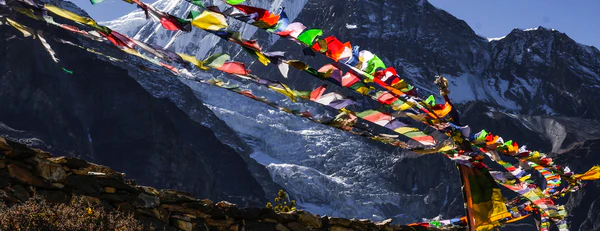
Why Read Himalayan and Nepali Spirituality?
What makes this reading area so rewarding is its range. A single spiritual shelf at Pilgrims can take you from beginner meditation books to deep Buddhist philosophy. It can move from Hindu devotional thought to Nepal-centered cultural studies. It can shift from practical daily discipline to rich symbolic ritual traditions.
Himalayan and Nepali spirituality is not a narrow niche. It is a meeting point between place, practice, belief, and real human experience. The mountains, rivers, temples, and festivals of this region are not just backdrops. They are part of the spiritual story itself.
For some readers, the first step will be meditation and personal growth. For others, it will be Buddhism, Hindu thought, sacred art, or Nepal's ritual life. The best approach is simple: choose a path that matches where you are right now and let that path grow naturally from there.
Foundations for Beginners

If you are just starting out, begin with books that make spiritual life feel clear and grounded. Meditation titles are often the best entry point. They connect inner practice with daily life in a way that feels useful right away. Books like The Miracle of Meditation, The Elements of Meditation, and Cultivating a Daily Meditation are good choices because they focus on real change rather than abstract ideas.
A beginner does not need advanced tantra or dense philosophy right away. What helps most at the start are books that introduce stillness, awareness, compassion, and discipline in simple, honest language. Once that foundation is in place, everything else becomes easier to approach. Buddhist philosophy, Hindu thought, and Nepal's sacred traditions all open up more naturally when you already have some inner ground to stand on.
It also helps to read slowly. Spiritual books are not meant to be rushed. Reading one chapter a day, sitting with what you read, and returning to passages that stay with you will do more than reading quickly and moving on.
Suggested books:
- The Miracle of Meditation
- The Elements of Meditation
- Cultivating a Daily Meditation
Buddhist Wisdom in the Himalayan World

Any guide to Himalayan spirituality must give serious space to Buddhism. For many readers, Buddhist books are where the deeper journey begins. In a Himalayan context, this makes complete sense. Meditation, compassion, emptiness, ritual, and monastic learning have shaped this region for centuries. They are not just religious ideas here. They are part of the culture, the architecture, the daily rhythm of life.
The key is to choose books that match your level. If you are drawn to calm, clarity, and daily practice, start with meditation-linked Buddhist books. If you are drawn to ideas and philosophy, you can move gradually toward more demanding titles as your understanding grows.
Pilgrims carries advanced works like The Emptiness of Emptiness, which is best approached after you already have some grounding in Buddhist thought. Starting there too early can feel confusing. But coming back to it after reading widely makes it one of the most rewarding books on the shelf.
Buddhism in Nepal is also not one single tradition. The Tibetan, Newari, and Theravada Buddhist worlds each have their own texts, practices, and ways of seeing. Exploring more than one of these traditions gives a fuller picture of how Buddhist wisdom lives and breathes in this part of the world.
Suggested books:
- Beginner-friendly Buddhist titles from the Buddhism collection
- Cultivating a Daily Meditation, which connects Buddhist view, meditation, and action
- The Emptiness of Emptiness for advanced readers interested in Buddhist philosophy
Hindu, Yogic, and Cross-Tradition Spirituality
Nepali spirituality cannot be understood through Buddhism alone. Nepal's sacred world is also shaped by Hindu devotion, yoga, pilgrimage, temple culture, and texts that cross religious boundaries freely. That is one reason a bookstore like Pilgrims is so useful. Readers can move from Buddhism to Hindu thought, from meditation to philosophy, and from one tradition to comparative spiritual inquiry without leaving the same space.
Yoga in Nepal is not simply a fitness practice. It is a path rooted in centuries of discipline, breath, and self-study. Books on yogic philosophy and practice offer a doorway into this deeper understanding. They also connect naturally with Buddhist ideas about the mind, making cross-tradition reading especially rewarding.
A strong cross-tradition pick from Pilgrims' catalog is One Religion Too Many. It presents encounters with the world's religions from a Hindu perspective and helps readers think about spirituality as a conversation rather than a fixed system. In a country like Nepal, where Hindu and Buddhist traditions have lived side by side for centuries, this kind of open approach feels true to the culture.
Suggested books:
- One Religion Too Many
- Hinduism and religion titles from Pilgrims' Books section
- Broader spirituality listings from Pilgrims' religion inventory
Sacred Culture, Iconography, and Nepal's Spiritual Life
One of the most rewarding ways to approach spirituality in Nepal is through sacred culture. Ritual objects, iconography, masks, deities, shrines, festivals, monasteries, and sacred urban spaces all tell a story. Pilgrims carries titles connected to these themes, and they show that spiritual reading is not only about belief systems. It is also about the visual, ritual, and cultural worlds that belief creates.
Many readers understand Nepal most deeply not through theory but through what they see. Religion here appears in art, in architecture, in street shrines, in the sound of temple bells at dawn. Books on sacred culture and iconography help explain what you are looking at and why it matters.
For readers interested in Buddhist imagery and Himalayan symbolism, The Tibetan Iconography of Buddhas Bodhisattvas and Other Deities is a particularly valuable title. It opens the door to a richer understanding of statues, paintings, temples, and sacred forms that travelers and readers encounter throughout Nepal and the wider Himalayan region.
Suggested books:
- The Tibetan Iconography of Buddhas Bodhisattvas and Other Deities
- Nepal religion and sacred-culture books from the Religion inventory
- Art, iconography, and ritual-focused titles connected to Buddhist and Hindu traditions
Pilgrimage, Travel, and the Spiritual Landscape
Nepal is one of the great pilgrimage destinations in the world. Pashupatinath, Muktinath, Lumbini, Swayambhunath, and Boudhanath draw millions of visitors each year, not only as tourists but as seekers. Reading about pilgrimage before or after visiting these places adds a layer that no travel guide alone can give.
Pilgrimage writing sits at the edge between travel memoir and spiritual reflection. The best books in this space do not just describe a journey. They ask what the journey does to a person from the inside. Peter Matthiessen's The Snow Leopard is one of the finest examples. It follows a trek through the Himalayas and becomes, over its pages, a meditation on grief, attention, and what it means to search for something you cannot name.
These books work well alongside more formal spiritual reading. Where a meditation manual tells you how to sit, a good pilgrimage book shows you what it feels like to walk. Both are true. Both are useful. Together they give a fuller picture of what spiritual life actually looks like on the ground.
How to Choose the Right Spiritual Book
The best book is the one that meets you where you are. If you want a gentle start, choose a meditation title first. It gives you a practical way into spiritual life without heavy language or complex ideas. If you want Himalayan Buddhist depth, start with accessible practice books and move into philosophy only once the basics feel solid. If you want Nepal-specific context, choose books on sacred culture and iconography that connect spirituality with the real places and traditions around you.
A simple reading path looks like this:
- Start with one meditation book.
- Add one Buddhist or Hindu introductory text.
- Read one Nepal-centered sacred culture or iconography title.
- Explore a pilgrimage or travel memoir for a different kind of depth.
- Move into more advanced philosophy only after the basics feel natural.
Buying from Pilgrims
Pilgrims Book House is one of Kathmandu's most trusted bookstores. It has served travelers, researchers, students, monks, and curious readers for decades. The online shop offers thousands of books across religion, Nepali literature, Buddhist studies, Hinduism, meditation, philosophy, and travel. For readers who want books rooted in Nepal and the Himalaya rather than generic global spirituality, it is an unusually good place to build a reading list.
To keep exploring, browse the Books section, the Buddhism collection, and the Meditation section. Readers who want a stronger Nepal context can also pair this guide with Pilgrims' blog on Best Books About Nepal for Travelers & Expats.
Frequently Asked Questions
What are the best Himalayan spirituality books for beginners?
Meditation books are usually the strongest starting point. They are practical, readable, and focused on real spiritual growth rather than theory alone.
Should I start with Buddhism or meditation?
For most readers, meditation is the easier entry point. It builds a foundation that makes Buddhist ideas easier to absorb and apply later on.
Are there Nepal-specific spirituality books beyond religion basics?
Yes. Pilgrims carries religion and sacred-culture titles that help readers understand Nepal's spiritual life through ritual, iconography, and local tradition.
What is the difference between Himalayan Buddhism and other forms of Buddhism?
Himalayan Buddhism, also called Tibetan or Vajrayana Buddhism, includes a rich tradition of tantra, ritual, meditation, and philosophical debate that developed in Nepal, Tibet, and surrounding regions. It differs from Theravada and Zen traditions in its use of imagery, mantra, and guru-student relationships, though all share the core Buddhist teachings on the nature of mind and suffering.
Can I buy these books online in Nepal?
Yes. Pilgrims sells books online from Kathmandu with delivery across Nepal and internationally, covering a wide range of Himalayan and spiritual subjects.
Building a Spiritual Library Over Time
A good spiritual library does not happen all at once. It grows slowly, book by book, as your understanding deepens. Start with one or two titles that feel right. Read them carefully. Let them sit. Then ask what question they have opened up, and find the next book from there.
Some readers return to the same books again and again over many years. A meditation manual that felt simple at the start can feel completely different after five years of practice. A philosophical text that once seemed impossible can suddenly become clear. That is one of the gifts of this kind of reading. The books do not change. You do.
Nepal and the Himalaya offer an unusually rich world to read your way into. The traditions here are ancient, layered, and still very much alive. Whether you are visiting for a week or living here for years, the right books will help you see and understand more of what surrounds you. Pilgrims Book House has been helping readers do exactly that for generations. It is a good place to begin and an even better place to keep returning to. Every visit, whether in person or through the online shop, is a chance to find something that opens a new door in your reading and your practice. That next door is always worth opening.

.webp)
