
Forty years of selling books in Thamel taught us one thing: the readers who leave Nepal understanding it are the ones
who read Nepali fiction, not just guidebooks. This is our 2026 list — the Nepali novels, poetry and short stories we
actually recommend when someone walks in and asks where to start.
Best Nepali Books to Read in 2026
Table of Contents
Best Nepali Books to Read in 2026
We've been selling books in Thamel since 1984. Over those four decades, we've watched Nepali literature do something remarkable — go from a category that tourists mostly ignored to one of the first things serious readers ask for when they walk through our door. "What should I actually read to understand Nepal?" That's the question we get more than any other.
This list is our answer for 2026. Not the safe answer. Not the "here are ten books with nice covers" answer. The one we give when someone's genuinely curious.
Why Nepali Literature Matters Right Now
Nepali writing has always been rich. What's changed is who's reading it—and in what language. More translations are reaching international audiences than ever before, and Nepal's literary community is producing work that doesn't just document Nepali life but interrogates it. Political, personal, uncomfortable in the best ways.
If you haven't read Nepali fiction seriously before, 2026 is a genuinely good time to start. The writers on this list aren't writing for export. They're writing for themselves, for their readers here, and that honesty comes through on every page.
The Novels
Karnali Blues—Buddhisagar
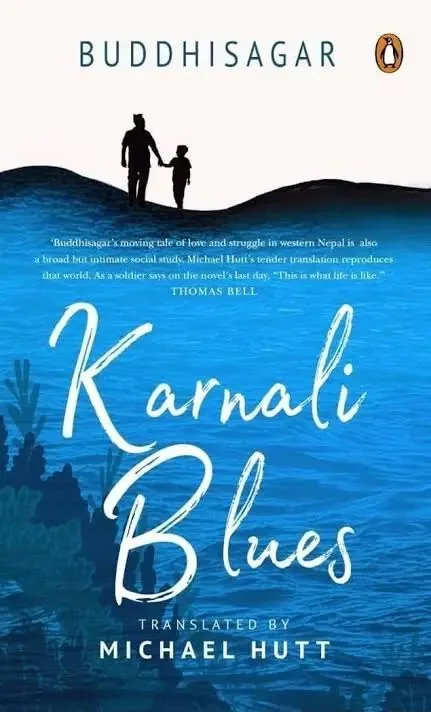
If you read only one Nepali novel this year, make it this one.
Buddhisagar published Karnali Blues in 2010 and it's been moving copies steadily ever since—which tells you something about a book in a market where most novels disappear within a year. The story is about a son and his father, set against the remote Karnali region in far-western Nepal. That's the simple version. The real version is that it's about growing up, about what sons owe fathers and what fathers owe sons, and about a part of Nepal that most Kathmandu residents treat as almost a foreign country.
The writing is quiet and precise. Buddhisagar doesn't overexplain. He trusts you to feel what he's not saying, which takes confidence in the reader that a lot of writers don't have.
We've sold this book to Nepali readers who came back to tell us they read it twice. We've sold it to travelers who emailed us from their home countries asking if we had anything else by the same author. That's a good sign.
Palpasa Cafe—Narayan Wagle
Published during the height of Nepal's Maoist conflict, Palpasa Cafe is a love story set against civil war. That combination sounds manipulative on paper. In practice it works because Wagle—who was a journalist during the conflict—writes the war with a specificity that fiction-only writers can't fake.
The protagonist Drishya is a painter. He falls in love with Palpasa, a Nepali-American woman, as the conflict reshapes the country around them. The book captures something specific about that period: the way ordinary life continued alongside extraordinary violence, and how people tried to hold onto private hope in the middle of public catastrophe.
Palpasa Cafe won Nepal's Madan Puraskar—the most prestigious literary award in Nepal—and it deserved it. If you're trying to understand modern Nepali history and want something more alive than a history book, start here.
Seto Dharti (White Earth)—Amar Neupane
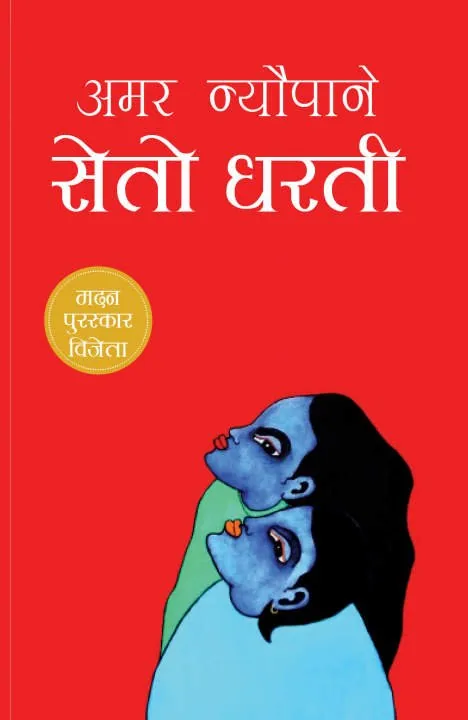
Amar Neupane is one of the sharpest writers working in Nepali fiction right now, and Seto Dharti is where that sharpness is most on display.
The novel deals with land, migration, and what happens to rural Nepal when young people leave for the Gulf or Malaysia and the villages slowly empty. This is the story of contemporary Nepal in a way that economic reports can't capture—the specific grief of a village that used to be full and now isn't, told through one family's experience over decades.
Neupane won the Madan Puraskar for this novel. He earned it.
Phool Ko Aankha (Eyes of Flowers)—Parijat
No list of Nepali literature is complete without Parijat, and Phool Ko Aankha is where we recommend starting with her work.
Parijat was Nepal's first woman to receive the Tribhuvan Pragya Puraskar, which is one metric of how significant she was. But the better metric is this: forty years after she wrote it, her prose still doesn't feel dated. She was writing about alienation, identity, and the difficulty of being a woman in Nepal with a directness that was unusual for her time and would be unusual for ours.
Her most famous novel is Shirishko Phool (The Blue Mimosa), which has been translated into English. But if you read Nepali, Phool Ko Aankha will show you her full range.
Poetry and Short Stories
Poems of Bhupi Sherchan
Bhupi Sherchan is to Nepali poetry roughly what Allen Ginsberg was to American poetry—a writer who changed what the form was allowed to do.
His poem Hamro Loktantra (Our Democracy) is quoted and misquoted constantly in Nepal. The original is better than any of the misquotations. If you read Nepali, find a collected edition of his work and read it in sequence. Watch the anger underneath the wit.
Short Stories by Bishweshwar Prasad Koirala
B.P. Koirala was Nepal's first democratically elected prime minister. He was also, separately, an excellent short story writer—which is not a combination that comes along often.
His stories deal with the psychological weight of political life, with desire and its consequences, with what it costs to want power and what it costs to lose it. The political biography and the fiction illuminate each other. Start with his collected stories if you can find them; we usually have copies at Pilgrims.
If You're New to Nepali Literature
Start with Palpasa Cafe in English translation. It's the most accessible entry point and the one that will make you want to read more.
Then read Karnali Blues. The English translation by Nirmal Man Tuladhar is faithful and readable.
After that, you'll have a sense of whether you want to go further into Nepali-language fiction or keep following the translations. Either path is valid. The literature exists in both.
Writers Worth Watching in 2026
Beyond the established names, a few writers are worth your attention right now.
Nayan Raj Pandey has been writing fiction that deals with Kathmandu's urban middle class — the generation caught between traditional expectations and a rapidly modernising city. His work is sharp and contemporary in a way that feels different from the village-and-migration stories that dominate Nepali literary fiction.
Muna Gurung writes in both Nepali and Nepalbhasa, and her work is one of the more interesting experiments in contemporary Nepali letters—fiction that moves between two linguistic worlds in a country with over 120 languages, most of them without a serious literary tradition in print. That's not a minor thing to be doing.
And keep an eye on the output from the Nepal Academy. They publish in Nepali and the quality has improved noticeably over the past five years. Not everything they release is essential, but when they get it right, they surface writers who wouldn't otherwise reach a wider readership.
We watch this space closely at Pilgrims. If you ask us who's interesting right now, we'll tell you what we're actually excited about—not just what's on the bestseller shelf.
A Word About Translations
The number of good English translations of Nepali literature has grown significantly in the past decade. Writers like Samrat Upadhyay—a Nepali writer who writes in English—have also opened up Nepali storytelling to international readers. His collection Arresting God in Kathmandu is worth your time if you haven't read it.
But translations lose things. They always do. If you have any Nepali, even functional reading-level Nepali, reading the originals is worth the extra effort. The rhythm of Nepali prose is part of what the best writers are doing, and that rhythm doesn't fully survive translation.
Madan Puraskar: Nepal's Literary Benchmark
If you want a reliable shortcut to quality Nepali literature, follow the Madan Puraskar winners.
The Madan Puraskar has been awarded since 1955. It's Nepal's oldest and most respected literary prize, given by the Madan Puraskar Guthi to the best book published in Nepali each year across fiction, non-fiction, and poetry. The selection process is serious. The winners hold up.
Some years the selection is conservative. Some years it surfaces a genuinely surprising voice. But as a reading list, following the Madan Puraskar winners will take you through the past seventy years of Nepali literature in a way that's more coherent than picking titles at random.
We keep a curated Madan Puraskar section at Pilgrims. If you're in Thamel, ask us and we'll show you what we have.
Where to Start If You're Overwhelmed
Five books. Start with these five if you're building a foundation:
- Palpasa Cafe—Narayan Wagle (civil war, love, contemporary Nepal)
- Karnali Blues—Buddhisagar (family, rural Nepal, quiet and devastating)
- Seto Dharti—Amar Neupane (migration, land, village Nepal)
- Shirishko Phool — Parijat (translated as The Blue Mimosa — alienation, the female experience)
- Arresting God in Kathmandu—Samrat Upadhyay (Nepali life in English, excellent entry point)
Read them in that order. By the end of Arresting God in Kathmandu you'll know whether you want to go deeper, and you'll have enough context to navigate where to go next.
Find These Books at Pilgrims Book House
We stock all of the titles mentioned in this list—originals in Nepali and English translations where they exist. If we're out of something, we can usually source it. If you're outside Nepal and want to order, reach out through our contact page.
Nepali literature has been central to what we do since we opened in Thamel in 1984. These aren't books we carry because they sell—though they do. They're books we carry because they're worth reading. That's a distinction that still matters to us.
Come find us in Thamel. We'll point you to exactly what you need.
Useful Links from Pilgrims Book House
Explore related collections at Pilgrims
Browse more on our shelves: Nepali Fiction, Nepali Story, Nepali Memoir.


.webp)
